
The lower back: train it instead of guarding it
Your lower back is not made of glass. It is muscle, and it answers to load like the rest.
The misunderstanding
After hearing “careful with your lower back” enough times, plenty of people stopped training it — and an area that never gets trained is an area that complains about anything. The spinal erectors are a big muscle, with a range of motion and the capacity to grow. What you want to avoid is not loading them: it is loading them suddenly, skipping every step in between.
Three exercises and what each is for
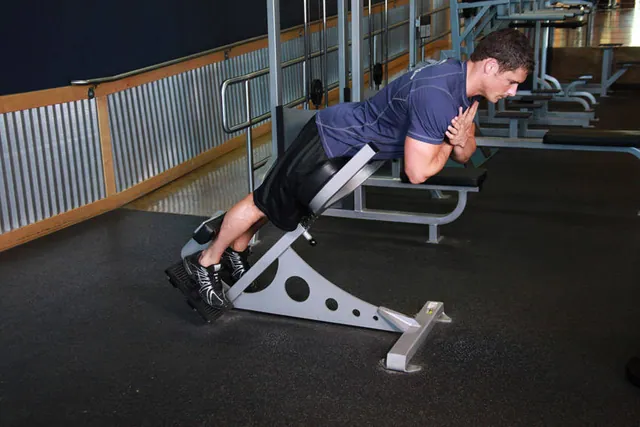
Back extensions (45-degree or Roman bench) load the erectors through a full range and are the easiest thing to progress with a plate on your chest. Good mornings and Romanian deadlifts train the whole chain with the back holding rather than moving. And heavy deadlifts train it for real, at the price of a fatigue that eats the rest of your week.
Progression, here more than anywhere
Start with bodyweight and controlled reps. When fifteen clean ones happen, add five kilos and go back to ten. No rush: connective tissue adapts more slowly than muscle, and that gap is where problems live.

And if it hurts
Back pain that does not settle in a few days, that travels down your leg, or that shows up with specific movements is not a job for a guide: it is a job for someone who can look at you. No exercise replaces that.
More on Hypertrophy
How many sets a muscle needs per week
The number that decides whether you grow. Not four, not forty.
Close to failure, not always to failure
What RIR is, why you leave one or two reps in the tank, and when to push.
Progress without stalling: double progression
When to add weight, when to add reps, and why not both at once.
How long to rest between sets
Two minutes is not a quirk: it is the reps on your next set.
Once a week per muscle is not enough
Why splitting your volume over two or three days beats one hammering.
Protein: how much and how to spread it
The daily total is what matters. The exact timing, far less than you hear.
This is general information written from the training literature, not medical advice or a personalised plan. If you take medication, have a health condition or something genuinely hurts, the person to ask is a healthcare professional.