
Progress without stalling: double progression
When to add weight, when to add reps, and why not both at once.
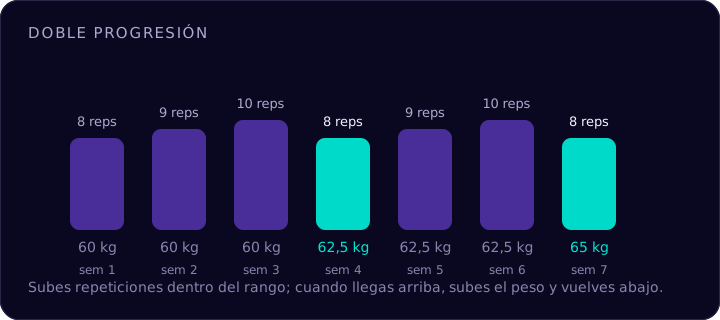
Muscle responds to something going up
If you do the same thing with the same weight and the same reps for months, your body has no reason to change. Progress is not adding weight every session: it is the total load you move trending upwards over weeks, even slowly.
How double progression works
Pick a range, say 8-12 reps. Keep the same weight until you hit the top of the range on every set (12, 12, 12) with clean form. That day you add weight, even if it drops you back to 8, and start again. The load only goes up when you have earned it, not because the calendar says so.
How much to add
The smallest jump your equipment allows. On the main lifts 2.5 kg usually works; on dumbbells and isolation the available jump is already big, so it is often better to earn one more rep before moving up. Adding five kilos at a time is what turns an 8-12 range into a 5-6 range.
More on Hypertrophy
How many sets a muscle needs per week
The number that decides whether you grow. Not four, not forty.
Close to failure, not always to failure
What RIR is, why you leave one or two reps in the tank, and when to push.
How long to rest between sets
Two minutes is not a quirk: it is the reps on your next set.
Once a week per muscle is not enough
Why splitting your volume over two or three days beats one hammering.
Protein: how much and how to spread it
The daily total is what matters. The exact timing, far less than you hear.
Stalled: what to check before switching routines
It is almost never the routine. Five things to check first.
This is general information written from the training literature, not medical advice or a personalised plan. If you take medication, have a health condition or something genuinely hurts, the person to ask is a healthcare professional.