
Protein: how much and how to spread it
The daily total is what matters. The exact timing, far less than you hear.
How much
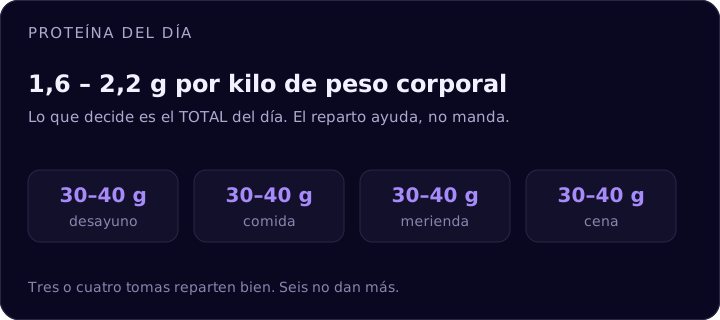
Between 1.6 and 2.2 grams per kilo of bodyweight per day covers almost anyone lifting weights. At 80 kg that is 130-175 g. Below 1.6 g/kg you leave muscle unbuilt; above 2.2 there is no clear extra benefit, though no harm either in healthy people.
How to spread it
Three or four meals with 30-40 g of protein each is the practical answer. The half-hour “anabolic window” after training is far wider than it was sold: if the daily total is there and you eat protein somewhere around the session, you are done.
Where from
Eggs, dairy, meat, fish, legumes, tofu, soy. Protein powder is neither better nor worse: it is convenient food for closing the gap when life gets in the way. On a vegetarian diet, mix sources and aim a little higher, since the amino acid profile is slightly worse.
More on Hypertrophy
How many sets a muscle needs per week
The number that decides whether you grow. Not four, not forty.
Close to failure, not always to failure
What RIR is, why you leave one or two reps in the tank, and when to push.
Progress without stalling: double progression
When to add weight, when to add reps, and why not both at once.
How long to rest between sets
Two minutes is not a quirk: it is the reps on your next set.
Once a week per muscle is not enough
Why splitting your volume over two or three days beats one hammering.
Stalled: what to check before switching routines
It is almost never the routine. Five things to check first.
This is general information written from the training literature, not medical advice or a personalised plan. If you take medication, have a health condition or something genuinely hurts, the person to ask is a healthcare professional.