
How much muscle you can actually gain
The honest numbers: per month, per year, and why year two looks nothing like year one.
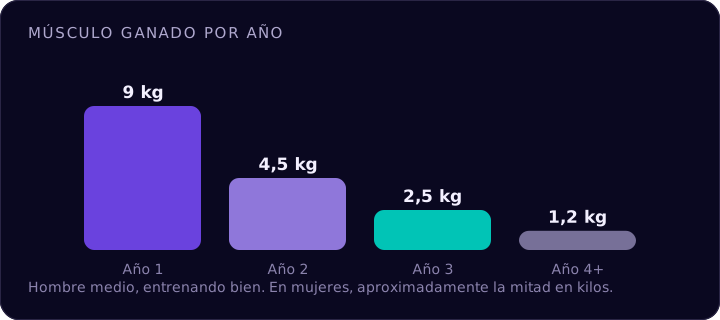
The figures, as a range
In the first year of serious training and eating for it, gaining 7 to 12 kilos of muscle is realistic for a man; 4 to 6 for a woman. Year two is half of that. Year three, half again. After that it is counted in grams per month and in years of work, not months.
Why the scale lies
In the first weeks the scale climbs faster than muscle can grow: that is water, glycogen and gut content. Gaining two kilos in two weeks is not two kilos of muscle, and losing them in three days is not losing muscle either. Which is why measurements and photos tell you more than the bathroom number.
The ceiling, without mysticism
It exists and it depends on your structure: height, frame width and muscle lengths set a limit that is not up for negotiation. Formulas promising “your exact potential” give a reasonable range at best; treating one as a verdict is as silly as ignoring it.
What to do with this
Use it to not quit. Most people stop training because they expected in six months what takes three years. If you gained five kilos of muscle in a year, you went fast, even if the mirror says otherwise.
More on Hypertrophy
How many sets a muscle needs per week
The number that decides whether you grow. Not four, not forty.
Close to failure, not always to failure
What RIR is, why you leave one or two reps in the tank, and when to push.
Progress without stalling: double progression
When to add weight, when to add reps, and why not both at once.
How long to rest between sets
Two minutes is not a quirk: it is the reps on your next set.
Once a week per muscle is not enough
Why splitting your volume over two or three days beats one hammering.
Protein: how much and how to spread it
The daily total is what matters. The exact timing, far less than you hear.
This is general information written from the training literature, not medical advice or a personalised plan. If you take medication, have a health condition or something genuinely hurts, the person to ask is a healthcare professional.