
Supersets: when they save time and when they cost you
They are for fitting the same work into less time. Not for fitting in more work.
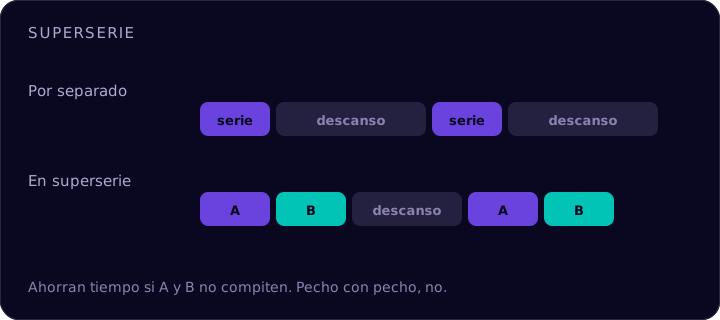
The good kind: muscles that do not compete
Pairing two exercises from groups that do not get in each other's way (back and chest, quads and calves, biceps and triceps) costs almost no performance and cuts total time by about a third. It is the most honest way to finish in 45 minutes without dropping sets.
The bad kind: the same muscle twice
Two exercises for the same group back to back with no rest means the second one happens with half the weight. It feels brutal, spikes your heart rate and leaves less stimulus than it seems. As an occasional finisher, fine; as the structure of your programme, it is trading load for sensation.
And a rule about space
In a busy gym a superset means two stations occupied. If you have to cross the room, the time saving is already gone — and so is the patience of whoever is waiting.
More on Hypertrophy
How many sets a muscle needs per week
The number that decides whether you grow. Not four, not forty.
Close to failure, not always to failure
What RIR is, why you leave one or two reps in the tank, and when to push.
Progress without stalling: double progression
When to add weight, when to add reps, and why not both at once.
How long to rest between sets
Two minutes is not a quirk: it is the reps on your next set.
Once a week per muscle is not enough
Why splitting your volume over two or three days beats one hammering.
Protein: how much and how to spread it
The daily total is what matters. The exact timing, far less than you hear.
This is general information written from the training literature, not medical advice or a personalised plan. If you take medication, have a health condition or something genuinely hurts, the person to ask is a healthcare professional.