
Lat pulldown to the chest or behind the neck
One you can load heavy for life. The other needs a shoulder almost nobody has.
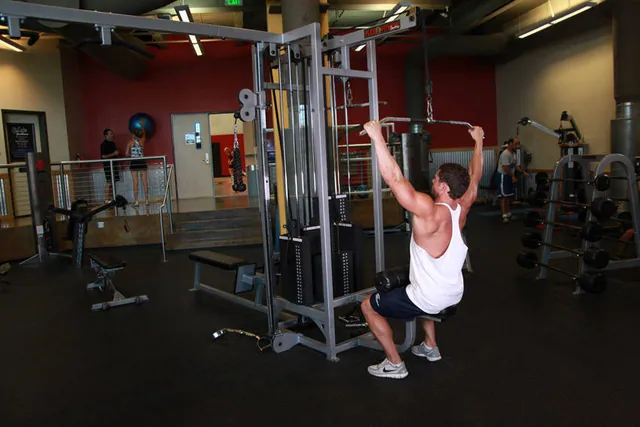
What actually differs
Pulling to the chest leaves the shoulder in a position that tolerates load and range. Behind the neck demands maximal external rotation with the arm abducted: without that range, your body finds it somewhere else, usually by pushing the head forward and compressing the shoulder. And the lat does practically the same work either way.
The undramatic conclusion
It is not that behind-the-neck “destroys your shoulder”: it is that it charges a mobility requirement and gives nothing back. For the same effort, pulling to the chest loads the same muscle and you can add weight to it for years. If behind-the-neck feels genuinely comfortable for you, nobody needs to ban it; there is just no reason to pick it.
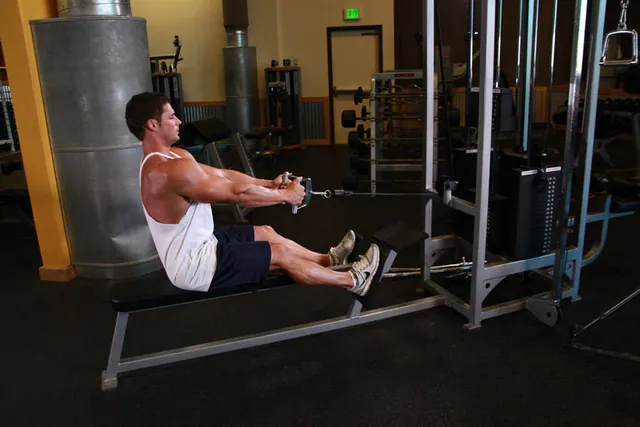
What does change a pulldown
Grip and width matter more than where the bar ends up. Wide and pronated loads more of the outer lat; neutral and slightly narrower lets you handle more weight and usually feels better at the elbow. Try both for weeks, not for a day.
More on Hypertrophy
How many sets a muscle needs per week
The number that decides whether you grow. Not four, not forty.
Close to failure, not always to failure
What RIR is, why you leave one or two reps in the tank, and when to push.
Progress without stalling: double progression
When to add weight, when to add reps, and why not both at once.
How long to rest between sets
Two minutes is not a quirk: it is the reps on your next set.
Once a week per muscle is not enough
Why splitting your volume over two or three days beats one hammering.
Protein: how much and how to spread it
The daily total is what matters. The exact timing, far less than you hear.
This is general information written from the training literature, not medical advice or a personalised plan. If you take medication, have a health condition or something genuinely hurts, the person to ask is a healthcare professional.