
One set to absolute failure: what holds up from HIT
One-set-per-exercise programmes with long rests did work. What does not hold is the “and it is optimal” part.
What it is
Heavy Duty-style high-intensity training proposes a single set per exercise, taken to absolute failure, with very few exercises and several rest days between sessions. The underlying idea: if the stimulus is brutal enough, extra volume only gets in the way of recovery.
What holds up
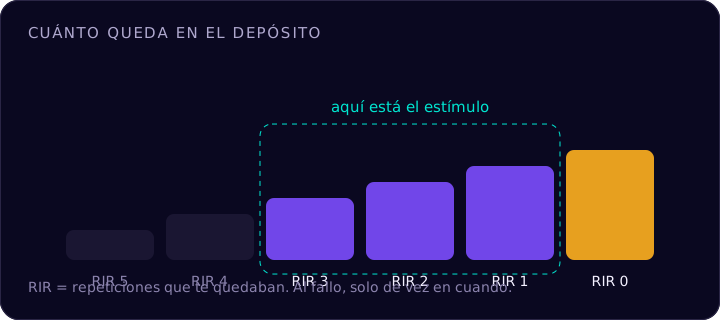
Two things, and they are not small. One: proximity to failure matters, and training soft does not grow muscle no matter how much volume you pile on. Two: volume has a real recovery ceiling, and overshooting is a thing. Against “more sets, always”, HIT was half right.
What does not
That one set per exercise is optimal. When one-set protocols are compared with three or more, everything else equal, multiple sets win. The volume-growth relationship rises, flattens and then falls: one set sits on the rising part, not at the peak.
Who it can still suit
Anyone very short on time, coming back from a long break, or older and needing more days between sessions. As a minimum-effective plan it performs surprisingly well. As an optimal one, the seams show.
More on Hypertrophy
How many sets a muscle needs per week
The number that decides whether you grow. Not four, not forty.
Close to failure, not always to failure
What RIR is, why you leave one or two reps in the tank, and when to push.
Progress without stalling: double progression
When to add weight, when to add reps, and why not both at once.
How long to rest between sets
Two minutes is not a quirk: it is the reps on your next set.
Once a week per muscle is not enough
Why splitting your volume over two or three days beats one hammering.
Protein: how much and how to spread it
The daily total is what matters. The exact timing, far less than you hear.
This is general information written from the training literature, not medical advice or a personalised plan. If you take medication, have a health condition or something genuinely hurts, the person to ask is a healthcare professional.