
The deload week: when and how
Not a holiday and not a magazine fad. It is lowering the dose so the next one works again.
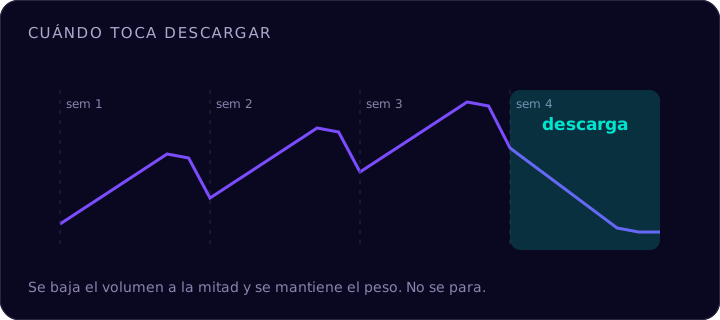
When you need one
Not by calendar — by signals: weights that had been climbing stall or drop, the warm-up feels heavy, you sleep worse and the urge to go has vanished. With one or two of those, push on. With three, deload.
How to do it
The version that works and almost nobody uses: keep the weight and cut the sets in half. Moving similar loads preserves strength and technique; what fatigues you is volume. Dropping the weight and keeping the sets is the opposite recipe and wastes the week.
How long
Five to seven days. Longer does not rest you better: it just starts making the habit harder to pick up. And you do not need to stop entirely, which is also the easiest way to never come back.

And an alternative
If planning deloads complicates your life, the other option is never needing one: stay a set or two below your weekly ceiling and stop living at failure. Less epic, considerably more sustainable.
More on Recovery and niggles
Muscle is built while you sleep
Training is the signal; sleep is when the work actually gets done.
Soreness or injury: when to keep going and when to stop
Telling soreness from a warning, and what to do with each.
How long a muscle takes to recover
One to three days, depending on what you did to it. Soreness is not the clock.
Shoulders: warming up the cuff without wasting the day
Four small muscles holding the most mobile joint in the body. Two sets are enough.
This is general information written from the training literature, not medical advice or a personalised plan. If you take medication, have a health condition or something genuinely hurts, the person to ask is a healthcare professional.