
Shoulders: warming up the cuff without wasting the day
Four small muscles holding the most mobile joint in the body. Two sets are enough.
What it is and why it complains
The rotator cuff is four muscles keeping the head of the humerus where it belongs while the shoulder moves in every direction. In a programme with lots of pressing and little pulling, the balance breaks and that area starts speaking up: an ache at the front of the shoulder, especially pressing overhead.
What helps before training
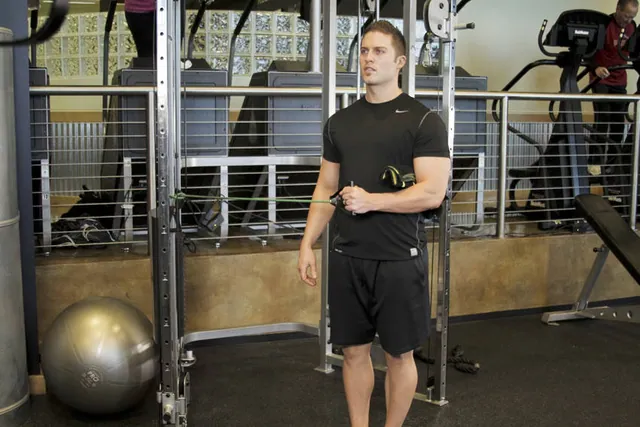
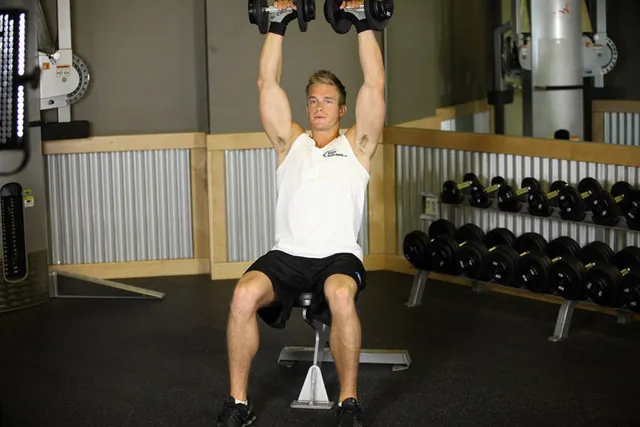
Two sets of banded external rotation, fifteen reps, unhurried and with no load heavy enough to make you compensate with your body. Plus one set of the press itself with an empty bar through the full range. Two minutes total; more is stealing energy from what you came to do.
What fixes the underlying problem
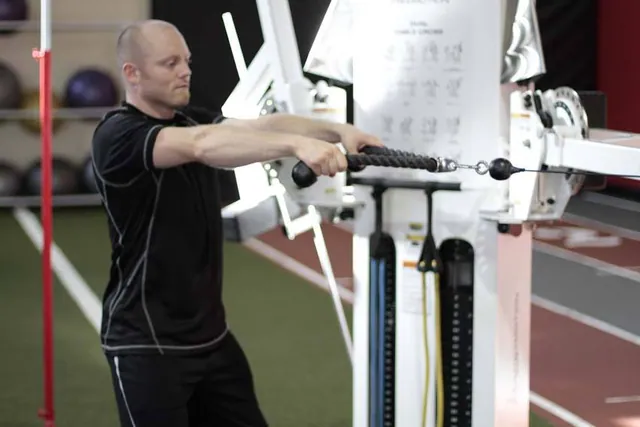
More pulling. Rowing and pulldown volume that matches or beats your pressing, and direct work for the lower traps and rhomboids. No warm-up compensates for a programme with twice as much push as pull.
And the limit of this guide
A shoulder that hurts at rest, loses strength suddenly, or will not let you raise your arm is not a warm-up problem. That one gets looked at in person.
More on Recovery and niggles
Muscle is built while you sleep
Training is the signal; sleep is when the work actually gets done.
Soreness or injury: when to keep going and when to stop
Telling soreness from a warning, and what to do with each.
The deload week: when and how
Not a holiday and not a magazine fad. It is lowering the dose so the next one works again.
How long a muscle takes to recover
One to three days, depending on what you did to it. Soreness is not the clock.
This is general information written from the training literature, not medical advice or a personalised plan. If you take medication, have a health condition or something genuinely hurts, the person to ask is a healthcare professional.